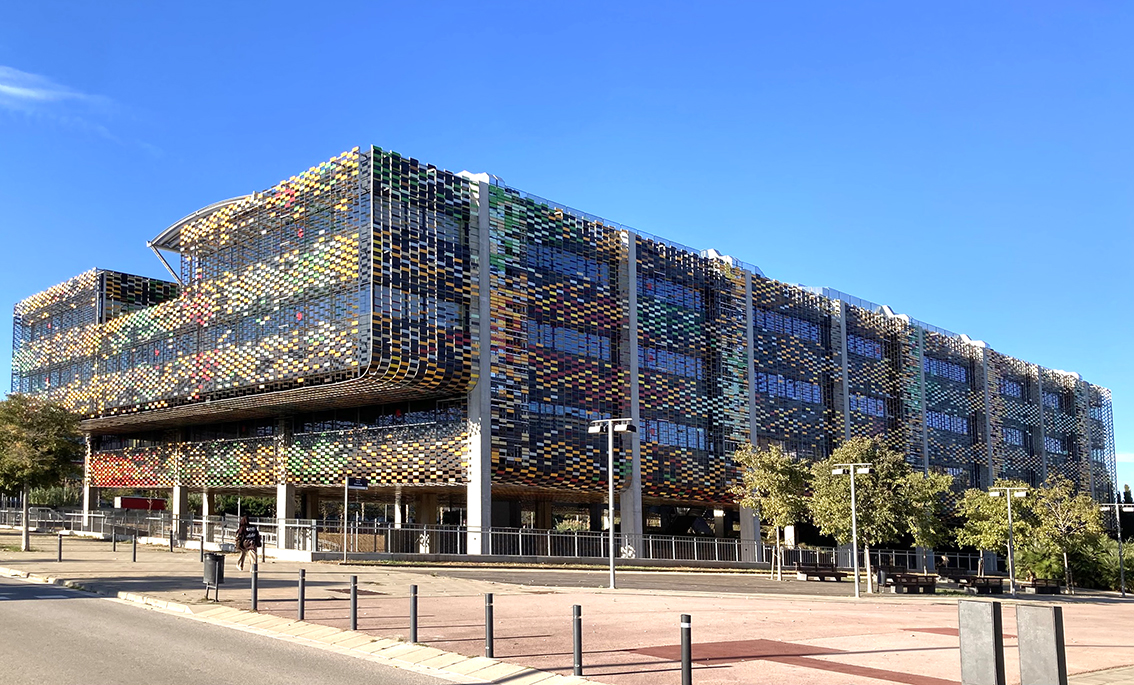
Denvelops develops the Parametric and Sustainable Envelope of the Delta Business Center
The patented Denvelops system has enabled the execution of a complex 7,500 m² double-skin façade using more than 45,000 customized tiles, combining parametric design, sustainability, and industrialization. The solution integrates continuous curved surfaces between façade and roof, optimizes solar protection, and achieves high levels of installation efficiency and construction competitiveness.
Architects: PICH Architects / Location: Viladecans, Spain / Year: 2025
Application: Façades / Ceilings
Denvelops has participated in the development of the architectural envelope for the Delta Business Center project, designed by PichArchitects in Viladecans — an innovative sustainable office complex that combines bioclimatic architecture, energy efficiency, and close integration with the natural landscape. More information about the project at Delta Business Center.
For this project, Denvelops developed a perforated double-skin cladding solution for façades and ceilings, resolving a highly singular geometry through its patented system and the use of the DEEB parametric plugin. This technology enabled the design, optimization, and digital “mapping” of the pattern and panelization of an envelope composed of more than 45,000 customized tiles, ensuring geometric precision and maximum production efficiency. The selected module format, measuring 454 x 180 mm, was carefully optimized to achieve the ideal balance between solar protection and transparency, avoiding an excessively opaque screen while enhancing visual comfort from inside the offices.
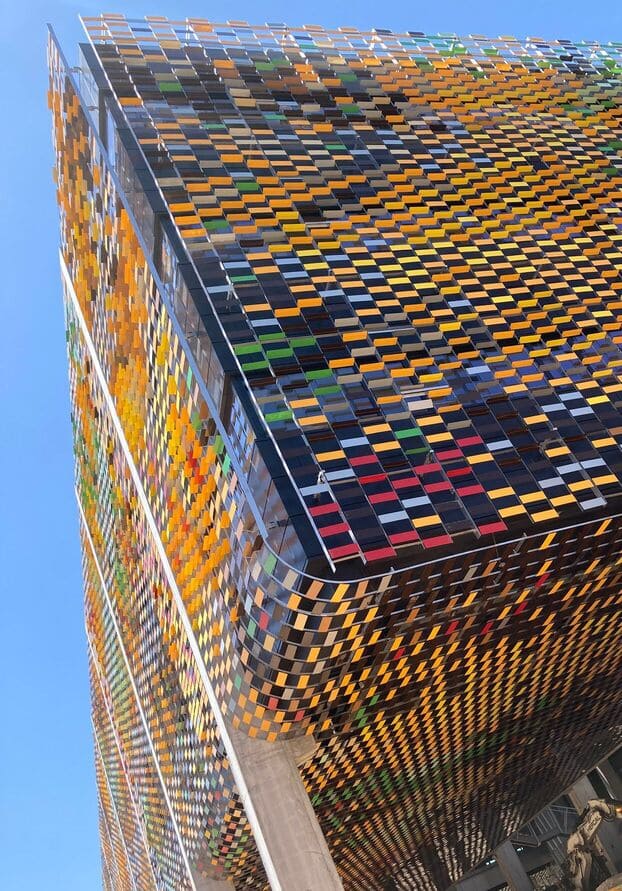
With a total surface area of 7,500 m², the project stands out for the continuity between façade and ceilings through curved surfaces that create a fluid and dynamic architectural skin. Thanks to the high level of industrialization of the Denvelops system, installation was carried out quickly, efficiently, and with high cost competitiveness, reaching installation rates of up to 300 m² per day with a single team while optimizing resources both in manufacturing and on-site execution. This speed was achieved thanks to the large dimensions of the fabricated panels — 2.35 x 3 m (width x height) — which were easily fitted onto the support structure of the primary façade, in this case executed by García Faura.
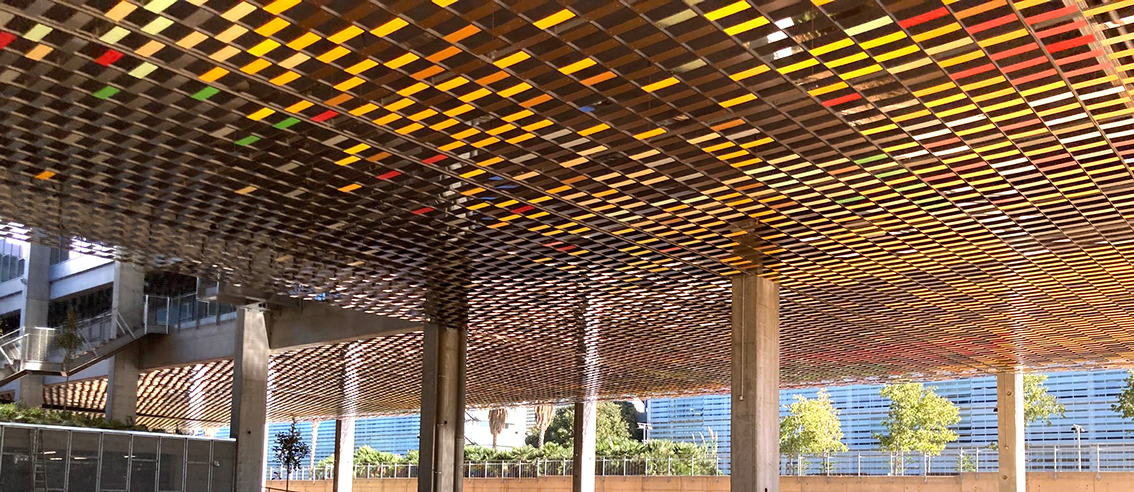
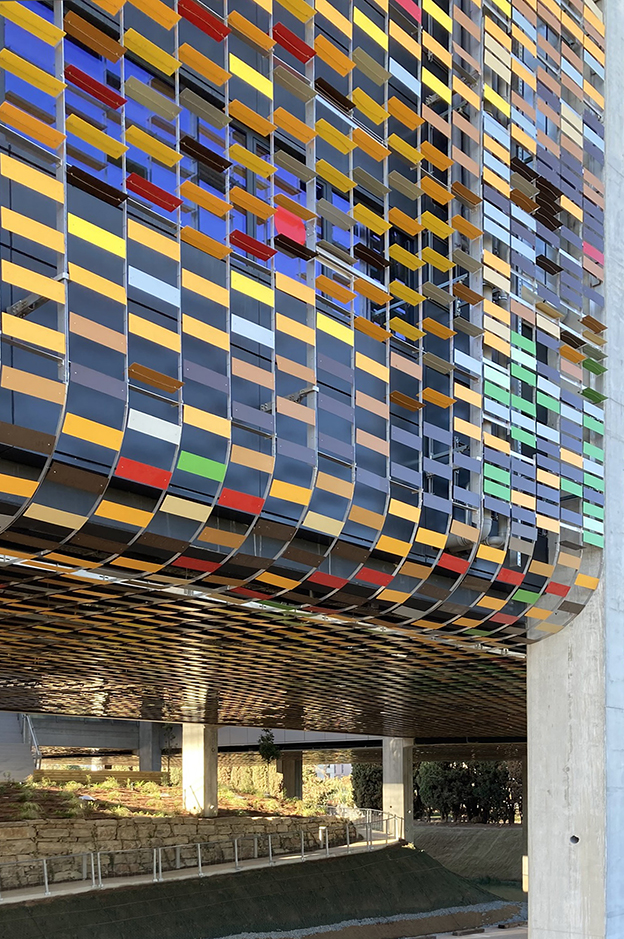
The envelope combines three different materials — powder-coated aluminum in eight colors, anodized aluminum, and mirror-finish stainless steel — resulting in a total of ten distinct finishes. The project also incorporates bi-oriented tiles, primarily arranged vertically to reinforce solar protection and strengthen the building’s visual identity. In window areas, horizontal tiles were integrated to improve visibility and outward views from the interior without compromising solar control performance or aesthetic continuity. The interplay between vertical and horizontal tiles also creates a highly dynamic volumetric effect, adding depth, visual vibration, and changing perceptions depending on the viewing angle and the incidence of light.
One of the project’s most distinctive features is the treatment of the ceilings that follow the topography of the ground floor, where the mirror-finish stainless steel pieces act as a reflective surface reproducing the terrain’s contours and multiple tonalities, bringing luminosity and a greater sense of spaciousness to these areas. This effect transforms the lower garden into a visual extension of the landscape, multiplying reflections and reinforcing the building’s integration with its natural surroundings.
The project reflects Denvelops’ ability to tackle highly complex architectural envelopes by combining parametric design, sustainability, and industrialization. Its system optimizes material usage, reduces waste, and improves construction efficiency, offering lightweight, adaptable solutions prepared to meet the challenges of contemporary architecture.